
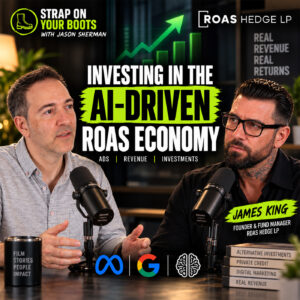
Listen to the Podcast episode here:
Today I want to talk about something that I honestly didn’t think would move this fast. I’ve been involved in technology and startups for a long time now, and usually when a new technology shows up, there’s this period where people overhype it, investors throw money at it, everybody starts panicking that the world is about to change overnight, and then reality kind of slows things down a little bit. You see what actually works, what doesn’t, what was exaggerated, what was useful, and eventually the technology settles into everyday life in a more practical way.
But with AI, I don’t really feel that slowdown happening yet. If anything, the opposite is happening. Every few months the tools get noticeably better. And not in some abstract technical benchmark way where only engineers notice the improvement. I mean regular people notice it. Business owners notice it. Writers notice it. Designers notice it. Students notice it. You can actually feel the difference between where the tools were a year ago and where they are now.
And over the past several months, I’ve started noticing more founders and companies quietly changing the way they operate because of this. Some are using AI to help with customer support. Some are generating marketing content. Some are building prototypes faster. Some are using it for coding help. Some are using it to summarize meetings or research competitors or organize data. And the more I started hearing these conversations, the more I realized that this isn’t really about one tool or one app. It’s about how businesses themselves might start functioning differently.
What really got me thinking about this was when I started hearing executives openly talk about reducing entry-level hiring because AI systems can already handle some of the tasks that junior employees used to do. And when I first heard that, I had kind of a mixed reaction to it. Part of me understood the business logic immediately because startups especially are always trying to survive. But another part of me started thinking about how many people begin their careers through those smaller roles.
I remember when I was younger and starting different projects, there were so many things I learned by doing tedious work. Sending emails, organizing information, editing content, talking to users, handling random tasks that honestly weren’t glamorous at all. A lot of entrepreneurship is built on doing unglamorous things over and over again until you slowly understand how businesses actually function. That process teaches you judgment. It teaches you communication. It teaches you patience. You start understanding why things break down and why small details matter.
And now I wonder what happens when companies start skipping parts of that process because software can handle them faster.
I don’t think we fully know yet.
And honestly, I think a lot of people are pretending they know exactly where this is heading when they really don’t.
That’s something I’ve noticed with technology conversations in general. Everybody wants to sound certain. Either AI is going to save humanity and create unlimited abundance, or it’s going to destroy jobs and collapse society. Most things in real life end up being more complicated and more gradual than that. Usually there are benefits mixed with tradeoffs, and people adapt unevenly over time.
Still, I can’t deny how useful some of these tools have become already. The other day I was working on some content ideas and organizing notes for multiple projects at once, and normally that kind of thing takes me hours because my brain jumps around constantly. I’ll start researching one idea, then suddenly I’m opening ten tabs, then I’m rewriting something, then I’m looking up references from an old interview, then I’m trying to remember some statistic I saw six months ago. My process is messy sometimes. Creative work often is.
And I realized AI tools are becoming surprisingly good at helping organize that chaos. Not replacing the thinking itself, at least not for me, but helping structure things faster. Helping me move from idea to execution quicker. And I can absolutely see why entrepreneurs are getting excited about that because one of the hardest parts of running a business is the sheer volume of tasks constantly competing for your attention.
People who’ve never run a startup sometimes imagine entrepreneurship as pitching investors or giving interviews or launching products, but most of the actual work is repetitive operational stuff. It’s emails. Scheduling. Revising documents. Following up. Research. Customer feedback. Technical issues. Marketing experiments that fail. Tiny adjustments nobody sees. You spend years doing invisible work.
So when founders suddenly get access to tools that reduce some of that workload, of course they’re going to use them.
I was talking to another entrepreneur recently and he told me he’s basically operating with what feels like a small digital staff now. He has AI tools helping him brainstorm ad copy, summarize analytics, draft emails, organize campaign ideas, and even review legal documents before he sends them to an attorney. And while he was describing all this, I realized something interesting. He wasn’t talking about AI in some futuristic sci-fi way. He was talking about it the same way people used to talk about hiring an assistant or outsourcing tasks.
That’s when it started feeling more real to me.
Because once technology stops feeling novel and starts feeling practical, adoption speeds up.
I think we’re already there.
At the same time, I’ve also noticed a weird exhaustion online lately. Maybe you’ve felt it too. Everything kind of blends together now. Social media posts sound similar. Articles feel flattened out. Video content feels optimized to death. Everybody’s using the same tone, the same pacing, the same formatting tricks. Sometimes I scroll through feeds and I genuinely can’t tell if something was written by a person who deeply understands the topic or generated quickly to satisfy an algorithm.
And I think part of what people are reacting to emotionally isn’t just AI itself. It’s the feeling that human communication online is becoming more synthetic overall.
There’s this strange sameness creeping into digital culture.
I noticed it especially recently when I was reading comments under videos and articles. Years ago you could usually tell when somebody had a distinct voice or perspective. Even bad writing felt human because it had imperfections and personality. Now a lot of online content sounds polished in this oddly sterile way where technically everything is fine, but emotionally nothing sticks with you.
Maybe that’s why long-form podcasts are still growing. People want to hear somebody think through ideas naturally. They want pauses, uncertainty, little tangents, stories, contradictions, moments where someone changes their mind halfway through a thought. Real conversation has texture to it. Human communication isn’t perfectly optimized.
And honestly, I think that may become more valuable over time.
Because if AI can generate endless amounts of competent content instantly, then personality and lived experience become more important, not less. People start looking for perspective instead of just information.
I’ve been thinking about this a lot with creative work too. There’s this fear that AI is going to replace artists, filmmakers, musicians, writers, and creators completely. And maybe certain kinds of production work will absolutely become more automated. We’re already seeing that happen. But I also think audiences eventually get very good at sensing authenticity. Maybe not perfectly, but enough to notice when something feels emotionally empty.
For example, I can listen to somebody tell a story from their real life and immediately feel more connected to it than some perfectly generated script that technically checks every box but has no actual experience underneath it. Real experiences are messy. People hesitate. They ramble a little. They remember details halfway through. They laugh at something unexpectedly. Human storytelling carries imperfections that actually make it believable.
That’s hard to replicate completely.
At least right now.
I also keep thinking about younger people entering the workforce because they’re growing up during a very strange transition period. When I was younger, the internet still felt separate from real life in some ways. Social media barely existed yet. Smartphones weren’t everywhere. You still had periods of disconnection built into daily life naturally.
Now younger generations are growing up inside fully digital ecosystems while AI tools become normal at the same time. And I honestly don’t know what the long-term psychological effects of that are going to be. I don’t think anybody does.
Imagine being eighteen years old right now trying to choose a career path while constantly hearing that AI might automate parts of your industry within a few years. That creates uncertainty people didn’t used to deal with at this scale.
At the same time though, there are opportunities now that didn’t exist before either. That’s the complicated part.
I’ve met incredibly talented people over the years who had great ideas but lacked resources. They couldn’t afford developers or editors or marketing teams. They had vision but not infrastructure. And AI lowers some of those barriers significantly. One motivated person can now prototype ideas, create content, organize systems, and experiment faster than ever before.
That changes entrepreneurship in a very real way.
I think we’re going to see more tiny companies built by very small teams. Maybe even one or two people operating businesses that previously required entire departments. And honestly, we’re already seeing hints of that happening. Some creators are running media brands almost entirely themselves using automation tools behind the scenes. Some developers are building products faster because AI helps speed up coding workflows. Some small businesses are automating customer communication in ways that would’ve seemed impossible for their budget a few years ago.
And when enough small efficiency gains stack together, business models start changing.
But I don’t think this means humans disappear from work. I think the nature of valuable work changes instead. Historically, automation tends to remove repetitive tasks first. Then people shift toward work involving judgment, relationships, creativity, leadership, strategy, emotional intelligence, or complex decision-making.
Of course AI is starting to touch some of those areas too, which is why this moment feels different.
Still, when I look at successful businesses long-term, they usually depend heavily on trust. And trust is ultimately a human thing. People invest in people they believe understand them. Customers stay loyal to brands that feel human. Audiences follow creators they connect with personally.
Even now, with all this AI-generated content exploding everywhere, the creators who stand out most still usually have a strong personal voice.
I also think there’s going to be a strange divide emerging between people who use AI passively and people who actively learn how to work alongside it. Kind of like what happened with the internet itself. Some people learned how to build businesses online, market online, communicate online, research online, and create online early. Other people resisted it completely and eventually felt left behind because the world changed around them anyway.
That doesn’t mean every new technology is automatically good. There are real concerns here. Deepfakes are getting scary. Fake information spreads incredibly fast already. AI-generated scams are increasing. There are ethical questions around ownership, privacy, and creative work that honestly haven’t been resolved yet.
And I think society tends to adopt technology faster than it develops rules for handling the consequences. We saw that with social media. We built these massive global communication systems before really understanding how they’d affect attention spans, mental health, politics, relationships, or public discourse.
Now we’re doing something similar with AI.
The tools are arriving faster than our social systems can process them.
Sometimes I wonder if we’re going to look back ten years from now and realize this was one of those transitional periods people didn’t fully understand while living through it. Kind of like the early internet years where nobody realized how much daily life was about to change. At the time it just felt like websites and email and weird chat rooms. Then gradually the internet reshaped communication, business, entertainment, dating, education, shopping, politics, basically everything.
AI feels like it might follow a similar pattern where the early versions seem interesting and useful, but the long-term effects spread quietly into every industry over time.
And honestly, I still feel conflicted about parts of it myself. Some days I’m fascinated by the possibilities and how much more efficient certain things could become. Other days I miss when the internet felt slower and more human and less algorithmically optimized. I think both reactions can exist at the same time.
Maybe that’s the healthiest way to approach technology in general. Staying curious without blindly worshipping it. Paying attention without panicking. Using tools thoughtfully instead of pretending they don’t exist.
Because regardless of how people feel emotionally about AI right now, businesses are experimenting with it aggressively already. That part isn’t hypothetical anymore.
And if there’s one thing I’ve learned from years in entrepreneurship and tech, it’s that once companies find ways to save time, reduce costs, or increase efficiency, those changes usually continue moving forward even if society feels uncomfortable initially.
The real question becomes how humans adapt around the technology rather than whether the technology disappears.
So I’d really love to hear what you think about all this. If you run a business, are you already using AI tools regularly? Do they actually help you or do they still feel limited? And if you’re younger and entering the workforce right now, how does all this feel from your perspective? Exciting? Stressful? Motivating? Uncertain?
I think these conversations matter because honestly, most of us are figuring this out in real time while the technology keeps evolving around us.
And as always, I’ll see everyone in next week’s episode.





Leave a Reply